When you are planning a new deck or updating an existing one in the Boston area, deck stairs often become one of the most important yet overlooked components. Beyond linking your deck to the yard, stairs affect safety, code compliance, and how well your outdoor structure holds up to New England weather. Advanced Deck & Porch has been building and repairing decks throughout Greater Boston and MetroWest for years, and we frequently see homeowners underestimate what goes into well-designed, long-lasting deck stairs.
Why Deck Stairs Matter More Than Most Homeowners Realize
Deck stairs are structural elements, not just a convenience. They bear weight every time someone climbs up or down, and they take the brunt of foot traffic and weather exposure. In Massachusetts, deck failures and injuries are often linked to improperly built stairs rather than the deck surface itself. That is why we treat every set of stairs with the same level of engineering care as the rest of the deck framing.
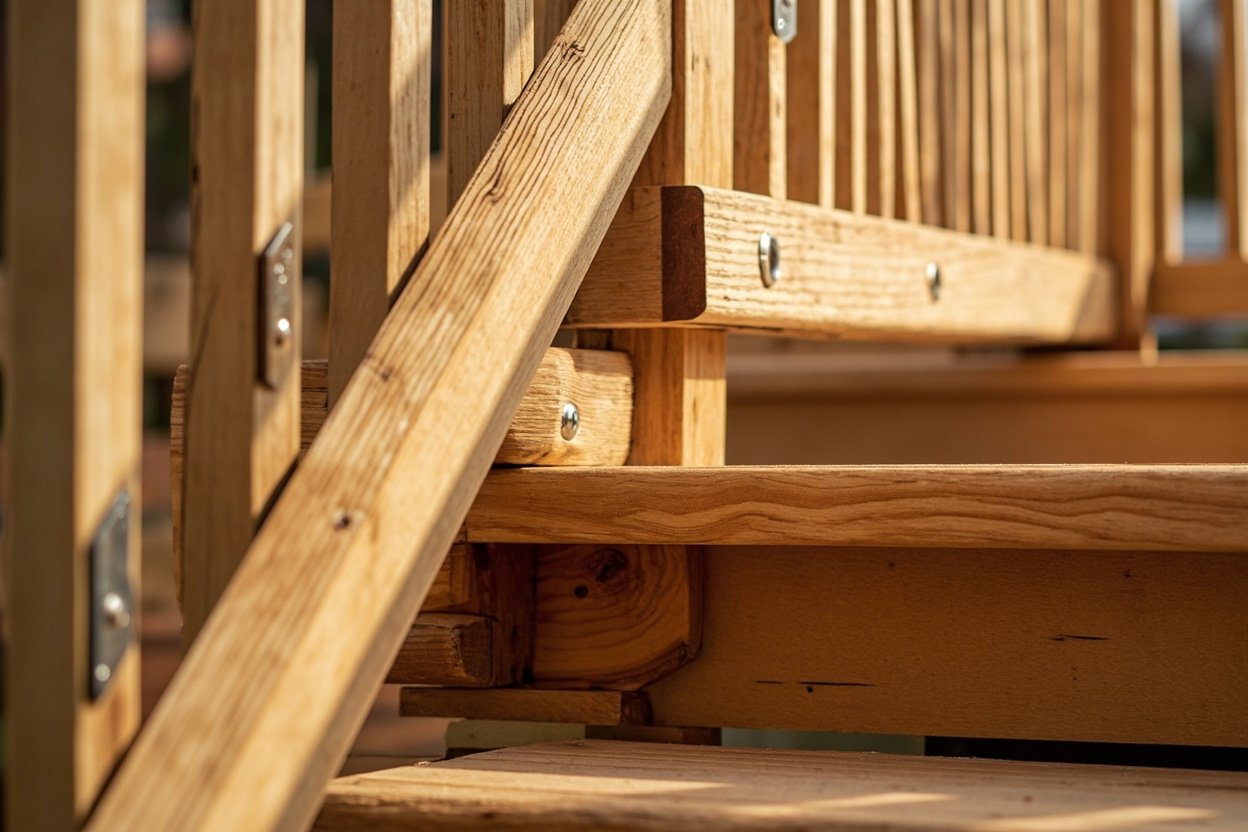
Good deck stairs start with a solid foundation. Each step needs proper support from the ground up, whether that means concrete footings, pre-cast piers, or a ledger attached to a properly braced rim joist. Without adequate support, even the most attractive stairs will begin to sag, shift, or creak within a few seasons.
Structural Framing for Boston Deck Stairs
The core of any durable staircase is its framing. Stringers, the diagonal boards that support the treads, must be cut from high-quality pressure-treated lumber rated for ground contact. For wider decks or heavier use, we often specify doubled-up stringers or steel reinforcements at the centerline to prevent bounce and long-term deflection.
Boston’s freeze-thaw cycle puts extra stress on below-grade connections. That is why we pay close attention to how the stair stringers attach to the deck framing and how the bottom of the stairs meet the ground. We typically recommend hot-dipped galvanized or stainless steel hardware in these critical locations because it resists corrosion far better than standard fasteners.
When rebuilding or repairing stairs on older homes in Newton, Brookline, or Wellesley, we often encounter existing framing that was built to older code standards. We bring everything up to current load and spacing requirements, which typically means stringers no more than 16 inches on center and treads that can support a 300-pound concentrated load.
Choosing the Right Deck Materials for Your Stairs
Material selection for deck stairs should account for both durability and maintenance. Pressure-treated pine remains a cost-effective choice, but it requires regular sealing to resist moisture absorption. Composite decking is a popular alternative for treads because it resists fading, splintering, and moisture damage without the annual upkeep. Many homeowners in Lexington, Natick, and Wayland choose composite for the stairs and landing because it provides a consistent look with the deck surface while reducing long-term maintenance.
Whatever material you choose, the treads should have adequate slip resistance, especially for exterior stairs exposed to rain and snow. We recommend adding texture or using products specifically designed with grip in mind for Boston winters when ice and slush are common.
Railing Safety and Code Requirements
Massachusetts building codes are clear about railing requirements for deck stairs. Any staircase with four or more risers must have a handrail on at least one side. The handrail height must be between 34 and 38 inches measured from the tread nose, and it must be graspable with a diameter that allows a firm grip.
Beyond code compliance, we focus on making railings comfortable and safe for all ages. That means choosing baluster spacing that meets the four-inch sphere rule to prevent accidental entrapment, ensuring all connections are secure, and selecting materials that will not rot or corrode over time. For homes in Quincy, Braintree, and Milton near the coast, we often recommend powder-coated aluminum or stainless steel railings because they hold up better against salt air than standard steel.
Weather Exposure and Seasonal Planning
Boston weather is demanding. Summer humidity, heavy snowfall, spring rains, and bitter cold all test outdoor structures. That is why proper flashing and drainage planning around stairs are essential. Water should be directed away from the framing members, and any wood-to-ground contact should be avoided wherever possible.
When planning your deck project, think about the seasons. Permits in Boston and many surrounding towns can take several weeks to process, and construction schedules fill quickly in the spring and fall. Starting the conversation in late winter or early fall often means a smoother timeline and less waiting once weather allows work to begin. Advanced Deck & Porch serves towns across Greater Boston and MetroWest, and we can guide you through local permit requirements for your specific city or town.
Maintenance Planning for Long-Lasting Deck Stairs
Once your stairs are built, a simple maintenance routine will extend their life significantly. Inspect the connections between the stringers and the deck framing every spring and fall. Check for loose fasteners, signs of rot in wood components, and any movement in the stairs under load. If you have composite treads, clean them with a gentle soap solution and avoid harsh chemicals that can damage the surface.
For homeowners with wood stairs, resealing every one to two years, depending on sun exposure and wear, is the single most effective thing you can do to prevent moisture damage and extend the lifespan of the structure.
Working with a Local Contractor
Building deck stairs in Greater Boston means navigating varying municipal codes, soil conditions, and lot constraints. An experienced local contractor understands these regional differences and can anticipate challenges before they become costly problems. Whether you are adding stairs to a new deck in Westwood, rebuilding worn stairs on a historic home in Wellesley, or expanding access to a porch in Acton, local knowledge matters.
Ready to discuss your project? Visit our deck and porch services page or call (857) 837-2100 to schedule a free onsite estimate.
Advanced Deck & Porch is a brand owned and operated by Sun Shore Construction. All estimates, contracts, and construction services are provided by Sun Shore Construction.
Advanced Deck & Porch | Boston Deck Builder