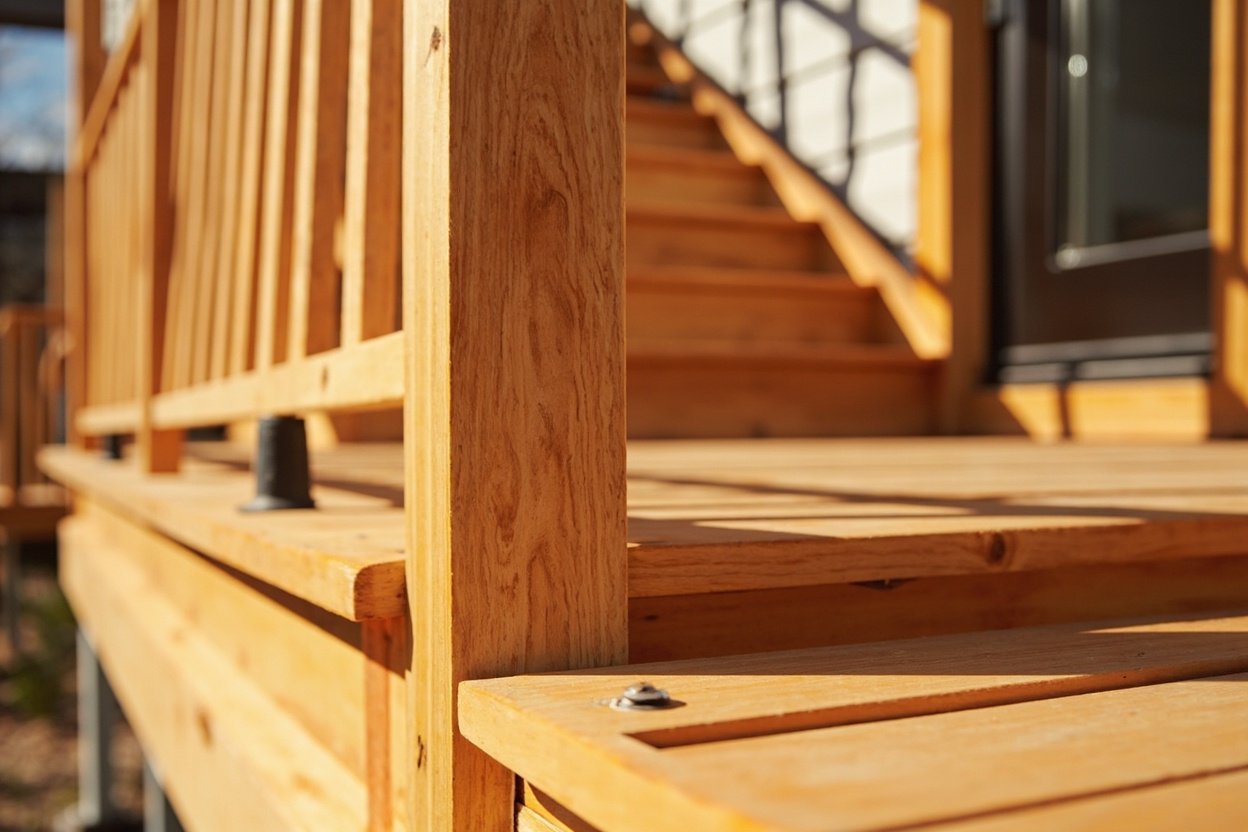
When you are planning a deck project in the Boston area, deck stairs often become one of the most important yet overlooked components. Whether you are building a new deck, adding stairs to an existing structure, or replacing worn-out stairs, there is much to consider before construction begins. At Advanced Deck & Porch, we have helped hundreds of homeowners across Boston, Greater Boston, and MetroWest design and build safe, durable stairs that complement their outdoor spaces.
Why Deck Stairs Matter More Than You Think
Stairs are not just a way to get from your deck to your yard. They are a critical safety feature that affects how your family and guests use your outdoor space every day. Poorly constructed stairs can create tripping hazards, deteriorate quickly due to New England weather, and even fail to meet local building codes. In Massachusetts, code compliance is not optional, and stairs that do not meet required standards can become a liability when it comes time to sell your home.
Understanding Boston-Area Building Codes for Deck Stairs
Boston and its surrounding communities follow Massachusetts State Building Code, which includes specific requirements for residential deck stairs. These regulations address rise and run dimensions, handrail placement, guardrail heights, and structural support requirements. Each town we serve, from Newton and Brookline to Wellesley and Weston, may have additional local amendments that affect your project.
The key measurements you should understand include the rise, which is the vertical height of each step, and the run, which is the horizontal depth. Standard residential stairs typically require a rise between 7 and 7.75 inches with a minimum run of 10 inches. Handrails must be placed at a consistent height and must be graspable. Guardrails for stairs are required when the stairs drop more than 30 inches from the ground.
Weather Exposure: A Boston-Specific Challenge
Living in Massachusetts means your deck stairs face everything from summer humidity to winter ice and snow. This seasonal exposure creates unique challenges that Boston homeowners must plan for. Water can seep into wood fibers, freeze during winter months, and cause cracking or splitting. Ice accumulation makes stairs slippery and dangerous without proper material choices and drainage considerations.
When selecting deck materials, many homeowners in the Boston area are choosing composite decking for stairs because it resists moisture absorption and does not warp, crack, or splinter the way traditional wood can. Composite materials also hold up well against the freeze-thaw cycles that characterize New England winters, reducing long-term maintenance needs and extending the life of your stairs.
Structural Framing: The Foundation of Safe Stairs
Beautiful stairs are only as good as the framing beneath them. Proper structural framing ensures your stairs can support daily foot traffic, resist lateral movement, and remain stable over years of use. The stringers, which are the diagonal support boards that run along both sides of the stairs, must be adequately sized and properly attached to the deck frame and the ground.
For decks in the Boston area, we typically recommend using pressure-treated lumber for structural components that contact the ground or are exposed to the elements. The connection points between stairs and deck must include proper hardware, including metal brackets and lag screws, to resist the forces that stairs endure every time someone walks up or down them. This attention to framing detail is what separates professional installation from shortcuts that lead to problems within a few years.
Material Choices for Boston Deck Stairs
You have several options when it comes to choosing materials for your deck stairs. Each has advantages depending on your budget, aesthetic preferences, and maintenance tolerance.
- Pressure-treated lumber remains a popular choice due to its affordability and durability when properly maintained. Regular sealing and staining help protect against moisture and UV damage.
- Composite decking offers low-maintenance appeal with excellent resistance to rot, insects, and weather-related deterioration. Many composite products include textured surfaces that provide better traction.
- Cedar or redwood offer natural beauty and natural resistance to decay, though they require more maintenance than composite options and may have a shorter lifespan in our climate.
- Stone or pavers can create a dramatic entrance but require different structural preparation and may involve additional permitting considerations.
Railing Safety: Non-Negotiable for Boston Homes
Your deck stairs need reliable railings for safety and code compliance. In Massachusetts, railings must meet specific height requirements and be capable of withstanding significant force without loosening. We install railings using sturdy posts, typically metal or pressure-treated wood, with secure attachment to the stringers or underlying structure.
Railing materials range from traditional wood balusters to modern cable rail systems, aluminum railings, and glass panels. Each option offers different aesthetics, maintenance requirements, and cost considerations. For families with young children, we often recommend baluster spacing that meets code requirements to prevent entrapment hazards while maintaining visual appeal.
Planning Your Deck Stairs Project
Before starting construction, you should consider how your stairs will integrate with your landscape and existing structures. The path from your deck to your yard should feel natural and convenient. If your yard has slopes or uneven terrain, you may need more complex stair designs or even retaining walls to create stable footing at the bottom of your stairs.
Many homeowners in communities like Lexington, Needham, and Natick find that adding deck stairs opens up their yard in new ways, creating easier access to gardens, patios, or play areas. Planning ahead for how you will use your outdoor space helps ensure your stairs are positioned and sized to serve your needs for years to come.
Working with a Local Contractor
Building deck stairs in the Boston area involves navigating local permitting requirements, understanding neighborhood associations where applicable, and ensuring your project complies with Massachusetts building codes. An experienced local contractor knows the requirements for each community we serve and can handle the permitting process efficiently.
At Advanced Deck & Porch, we have built deck stairs for homeowners throughout Greater Boston and MetroWest. We understand how local weather patterns affect material selection and construction techniques. We use proven methods that account for our unique climate while creating stairs that look great and perform reliably season after season.
Ready to discuss your project? Visit our deck and porch services page or call (857) 837-2100 to schedule a free onsite estimate.
Advanced Deck & Porch is a brand owned and operated by Sun Shore Construction. All estimates, contracts, and construction services are provided by Sun Shore Construction.
Advanced Deck & Porch | Boston Deck Builder