
Thinking about a bathroom renovation in Boston? You are not alone. Greater Boston homeowners invest in bathroom upgrades every year, whether they own a classic three-decker in Somerville, a colonial in Newton, or a modern condo in Back Bay. The reasons vary: outdated fixtures, poor layout, water damage, or simply wanting a more comfortable home. Whatever your situation, a well-planned bathroom remodel adds real value to your property and improves your daily routine.
Before you start tearing out tile or ordering vanities, there are several important considerations unique to Boston-area homes. This guide walks you through what you need to know before you begin.
Why Boston Homes Present Unique Bathroom Remodeling Challenges
Greater Boston is known for its historic housing stock. Many homes in Middlesex County, Norfolk County, and surrounding neighborhoods were built before modern building codes existed. That means you may encounter plaster walls, cast-iron plumbing, and original floor joists that are not up to today’s standards.
Older homes often have smaller bathrooms with awkward layouts. Doorway placements, support beams, and shared walls with neighboring units can limit your design options. A professional bathroom designer understands how to work within these constraints while maximizing space and functionality.
Ventilation and Moisture Control in Boston Bathrooms
Boston’s humid summers and cold winters create a challenging environment for bathrooms. Without proper ventilation, moisture leads to mold, peeling paint, and damaged subfloors. This is one of the most overlooked aspects of bathroom remodels in older homes.
Effective ventilation starts with choosing the right exhaust fan. It should be sized for your bathroom’s cubic footage and vented directly outside, not into an attic or crawl space. In multi-family buildings, venting requirements may be more strict due to shared infrastructure.
Beyond the fan, waterproofing is critical. Waterproofing membranes behind tile, sealed caulking around fixtures, and moisture-resistant drywall all contribute to a long-lasting renovation. Skipping these steps to save money upfront often leads to expensive repairs later.
Layout Considerations for Boston Bathroom Remodels
Space is at a premium in many Boston-area bathrooms. Whether you are working with a compact powder room or a full master bath, layout planning is essential. Here are common layout challenges and solutions:
- Limited square footage: Consider a wall-mounted vanity or a corner sink to free up floor space. Floating shelves instead of bulky cabinetry can also help.
- Low ceilings: Recessed lighting and frameless glass shower doors create a sense of openness. Avoid bulky light fixtures that hang too low.
- Shared plumbing walls: Keeping your new layout aligned with existing drain and vent lines reduces plumbing costs and complexity.
- Door swing conflicts: In tight spaces, pocket doors or sliding barn doors eliminate the clearance issues caused by swinging doors.
Walk-in showers are especially popular in Boston renovations. They offer a modern look, easier accessibility, and make small bathrooms feel larger. Custom tile work can turn a basic walk-in shower into a standout feature.
Material Choices That Hold Up in New England
Not all materials perform equally in Boston’s climate. Temperature swings between seasons cause expansion and contraction. High humidity levels affect wood and certain adhesives. Choosing the right materials from the start prevents premature wear.
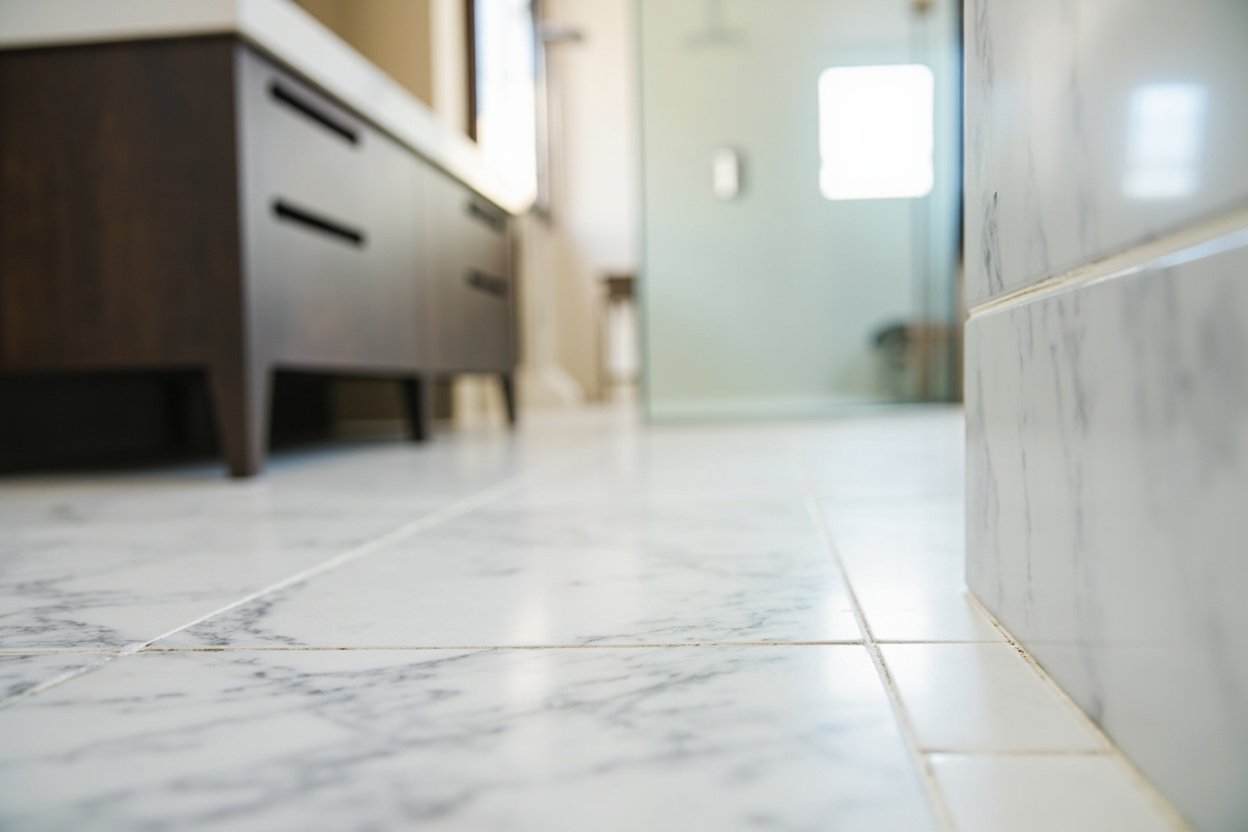
For flooring, porcelain tile is a reliable choice. It resists moisture, handles temperature changes well, and comes in styles that mimic natural stone or hardwood. If you prefer luxury vinyl plank, make sure it is rated for wet areas and installed over a properly prepared subfloor.
Solid surface or quartz countertops resist staining and do not require sealing, making them practical for busy bathrooms. Natural stone, while beautiful, requires ongoing maintenance in a humid climate.
For tub-to-shower conversions, acrylic or solid-surface surround systems install quickly and provide a watertight surface. Custom tile offers more design flexibility but requires skilled craftsmanship and thorough waterproofing.
Permits and Regulations in Greater Boston
Bathroom renovations in Boston and surrounding communities typically require permits, especially for electrical and plumbing work. Requirements vary by city and town, but any project that moves plumbing fixtures, adds circuits, or alters structural elements will need local approval.
Working with a licensed contractor familiar with Middlesex County and Norfolk County building departments helps navigate the permit process smoothly. Proper permits also protect you if you sell your home, as inspectors verify that work meets code.
Choosing a Bathroom Remodeling Contractor in Boston
Finding the right contractor makes or breaks your project. Look for a company with experience in the Boston area and a portfolio of completed remodels. Ask about their approach to waterproofing, their familiarity with older home systems, and how they handle unexpected issues once walls are opened.
A trustworthy contractor provides clear proposals, explains material options, and outlines the steps from demo to final inspection. Avoid anyone who offers vague timelines or asks for full payment upfront.
What a Full Bathroom Remodel Includes
When you hire a full-service bathroom remodeling company, the process typically covers several phases:
- Design consultation: Discuss your goals, budget, and must-haves. The designer proposes layout options and material selections.
- Demolition: Remove existing fixtures, tile, and any damaged subfloors or walls.
- Plumbing and electrical: Update or relocate pipes and wiring to support the new layout.
- Waterproofing: Install membranes, sealants, and moisture barriers before tile goes in.
- Tile and surfaces: Custom tile work, countertop installation, and vanity setup.
- Fixtures and finishes: Faucets, showerheads, lighting, mirrors, and accessories.
- Final inspection: Verify all work meets local codes and manufacturer specifications.
Each project varies depending on scope and existing conditions, but this framework gives you a realistic sense of the process.
Make the Most of Your Boston Bathroom Renovation
A bathroom renovation is a significant project, but it does not have to be overwhelming. By understanding the unique challenges of Boston-area homes, planning your layout carefully, and choosing durable materials suited to the local climate, you set yourself up for a successful outcome.
Whether you need a simple powder room update or a complete master bath transformation, taking the time to plan upfront pays off in the long run.
Ready to plan? Visit our bathroom remodeling page for Free, no-obligation estimate
When planning your bathroom renovation boston, focus on clear scope, proper waterproofing, and smart layout choices.

