Adding or replacing deck stairs is one of those projects that seems simple on the surface but involves real decisions about structure, safety, and durability—especially in a climate like ours. If you are searching for deck stairs in Boston, Greater Boston, or MetroWest, understanding the basics helps you ask better questions and make informed choices about your home.
Why Deck Stairs in Boston Face Unique Challenges
Boston weather is hard on outdoor structures. Between freezing winters, spring rain, and humid summers, your deck stairs take a beating year-round. Ice and snow place extra stress on stair stringers and connections. Freeze-thaw cycles can crack concrete footings and loosen fasteners if materials and installation are not up to standard. That is why structural framing for deck stairs needs to go beyond the minimum code requirements in our area. At Advanced Deck & Porch, we build stairs designed to handle New England weather, not just pass a one-time inspection.
Choosing the Right Deck Materials for Your Stairs
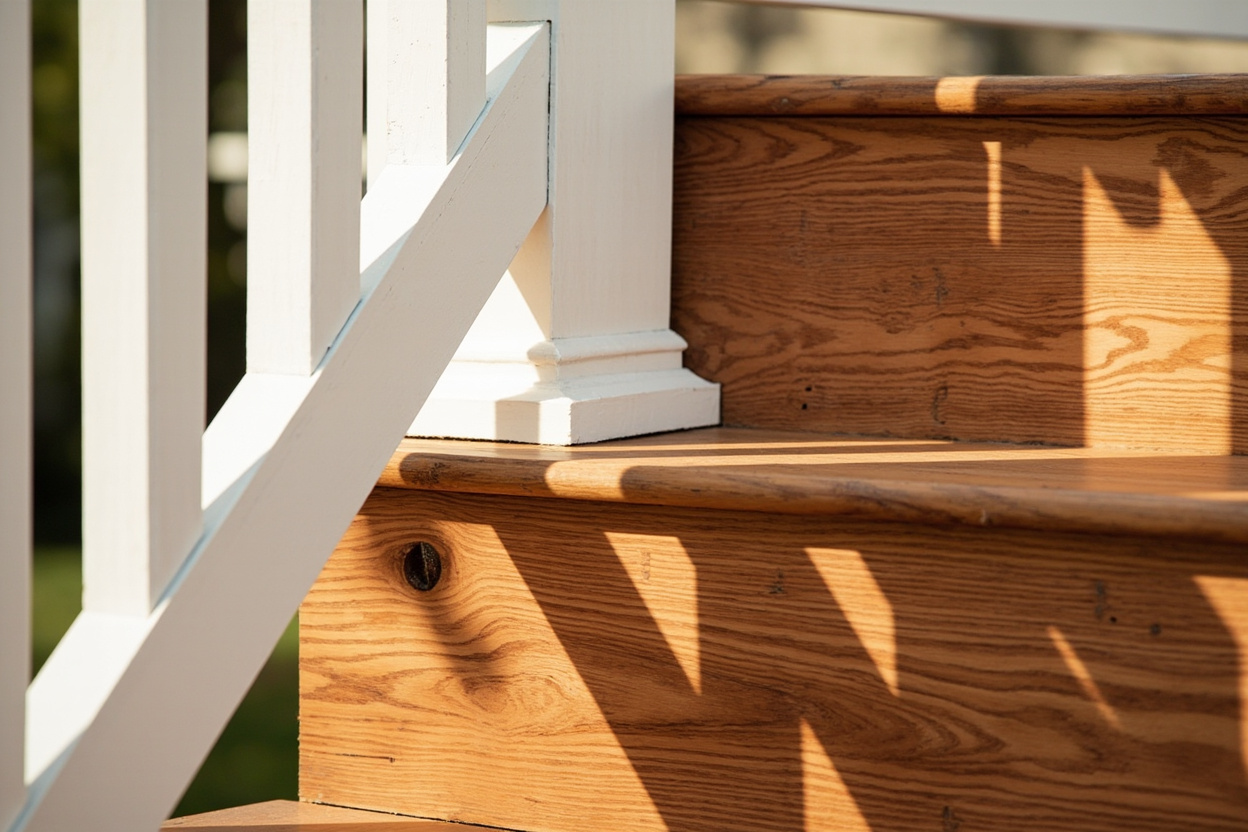
The material you choose for your deck stairs affects both appearance and long-term maintenance. Composite decking has become a popular choice because it resists moisture, splintering, and decay without the annual sealing that wood requires. It holds up well against Boston’s freeze-thaw conditions and maintains its look season after season. Traditional wood, typically pressure-treated lumber, remains a solid and cost-effective option. If you go with wood, plan for regular maintenance including sealing and inspection each spring to catch any weather-related wear early.
Your stair treads and risers should match or complement the deck surface while standing up to heavier foot traffic. Riser boards take on less wear than treads, but they still benefit from moisture-resistant materials. Mixing materials—composite treads on pressure-treated stringers, for example—can balance cost and durability.
Structural Framing and Safety Standards
Strong deck stairs start with proper structural framing. The stringers—the angled boards that support the treads—must be securely attached to the deck frame and rest on solid footings. In Greater Boston and MetroWest communities like Newton, Brookline, Wellesley, and Quincy, local building codes typically follow the Massachusetts State Building Code, which includes standards for stair dimensions, headroom, and load capacity. Requirements generally include:
- Consistent riser height and tread depth throughout the run
- Properly sized and spaced stringers for the expected load
- Secure connections using appropriate fasteners and hardware
- Clearances and headroom at the top and bottom of the stairs
Railing safety is equally important. Any deck stairs with more than a few steps typically requires a handrail on at least one side. Railings must meet height and spacing requirements to prevent accidents, particularly for households with children or elderly residents. Aluminum, vinyl, and composite railing systems each offer different aesthetics and maintenance profiles, and the right choice depends on your deck design and personal preference.
Permits and Planning in Boston Area Communities
Most deck stair projects in Boston and surrounding towns require a building permit. Communities like Weston, Wellesley, Lexington, and Wayland have their own permit processes and inspection schedules, though they generally align with state standards. Adding or replacing deck stairs typically triggers a permit because it involves structural work and changes to your home’s footprint or exit path. The good news is that the permit process ensures your project meets safety standards and protects your investment if you ever sell your home.
Before you start, check with your local building department. Some towns have specific requirements for stairs that serve front porches versus back deck access, and older neighborhoods in Boston, Quincy, and Milton may have additional considerations related to historic districts or lot coverage rules.
Maintenance Planning for Long-Lasting Deck Stairs
Once your new deck stairs are built, a simple maintenance routine keeps them safe and looking good for years. Inspect connections each spring, especially after a rough winter. Look for loose boards, rusted fasteners, and any movement in the stringers. If you have composite stairs, rinse them periodically to remove dirt and pollen. For wood stairs, plan to seal or stain every couple of years depending on weather exposure and foot traffic.
Putting a seasonal maintenance checklist together takes just a few minutes and catches small problems before they become costly repairs. That is true deck care—proactive, not reactive.
Working with a Local Deck Contractor
Whether you are adding stairs to a new deck or replacing worn-out steps on an existing structure, working with a contractor who knows Boston-area building conditions makes a real difference. Local experience means understanding how our soil, weather, and permit offices work. Advanced Deck & Porch serves homeowners across Boston, Newton, Brookline, Wellesley, Weston, Westwood, Lexington, Needham, Natick, Wayland, Bedford, Burlington, Billerica, Quincy, Braintree, Weymouth, Milton, Canton, Norwood, and Acton, and brings that regional knowledge to every project.
Ready to discuss your project? Visit our deck and porch services page or call (857) 837-2100 to schedule a free onsite estimate.
Advanced Deck & Porch is a brand owned and operated by Sun Shore Construction. All estimates, contracts, and construction services are provided by Sun Shore Construction.
Advanced Deck & Porch | Boston Deck Builder