If your current deck is showing its age with warped boards, loose railings, or visible structural issues, you are not alone. Many homeowners in Boston and the surrounding communities find themselves weighing the options between repairs and a full deck replacement. Understanding what goes into a proper deck rebuild can help you make an informed decision that protects your home and enhances your outdoor living space for years to come.
Why Deck Replacement Makes Sense in Greater Boston
The New England climate presents unique challenges for wooden structures. Cold winters, humid summers, and exposure to salt air in coastal areas take a toll on deck materials over time. When structural framing shows signs of deterioration or when repairs become frequent and costly, investing in a complete deck replacement often proves more economical than piecemeal fixes.
Local building codes in Boston and towns like Newton, Brookline, and Quincy have specific requirements for deck construction that reflect both safety concerns and weather considerations. A professional deck replacement ensures your new structure meets current standards for structural integrity, load-bearing capacity, and proper flashing to prevent moisture damage to your home.
Understanding Structural Framing Requirements
The foundation of any lasting deck lies in its structural framing.Proper framing starts with pressure-treated lumber rated for ground contact, with beams and joists spaced according to the deck’s size and intended use. In our service area, which includes Wellesley, Weston, Lexington, and Wayland, we frequently see decks that failed prematurely because the original construction cut corners on framing materials or connections.
During a deck replacement, we inspect the connection points where the deck meets your house, ensuring the ledger board is properly flashed and bolted. This critical junction point must account for moisture management to prevent water from damaging your home’s siding or rim joist. Posts should be set on concrete footings that extend below the frost line to prevent heaving during Boston’s freeze-thaw cycles.
Choosing the Right Deck Materials
Modern homeowners have excellent material options beyond traditional pressure-treated wood. Composite decking has become increasingly popular throughout MetroWest communities like Natick, Needham, and Acton because it resists fading, staining, and moisture damage without requiring annual sealing or staining. While the upfront cost is higher, many homeowners find the reduced maintenance requirements justify the investment.
Premium composite boards now closely mimic the appearance of natural wood while offering enhanced durability. For homeowners who prefer the look of real wood, cedar or redwood remain viable choices, though they require more ongoing maintenance to maintain their appearance in Boston’s variable climate. Many of our clients in Milton, Canton, and Westwood opt for composite decking on visible surface areas while using pressure-treated lumber for the structural components hidden beneath.
Railing Safety and Stairs: Meeting Code Requirements
Deck railings serve both aesthetic and safety purposes. Current building codes across our service area mandate specific railing heights, baluster spacing, and load requirements. These regulations exist to protect your family and guests, particularly on elevated decks where falls pose serious risks.
Railing options range from traditional wood to aluminum, vinyl, and glass panel systems. Each material offers different maintenance requirements and visual appeal. When planning your deck replacement, consider how the railing style complements your home’s architecture while meeting safety standards.
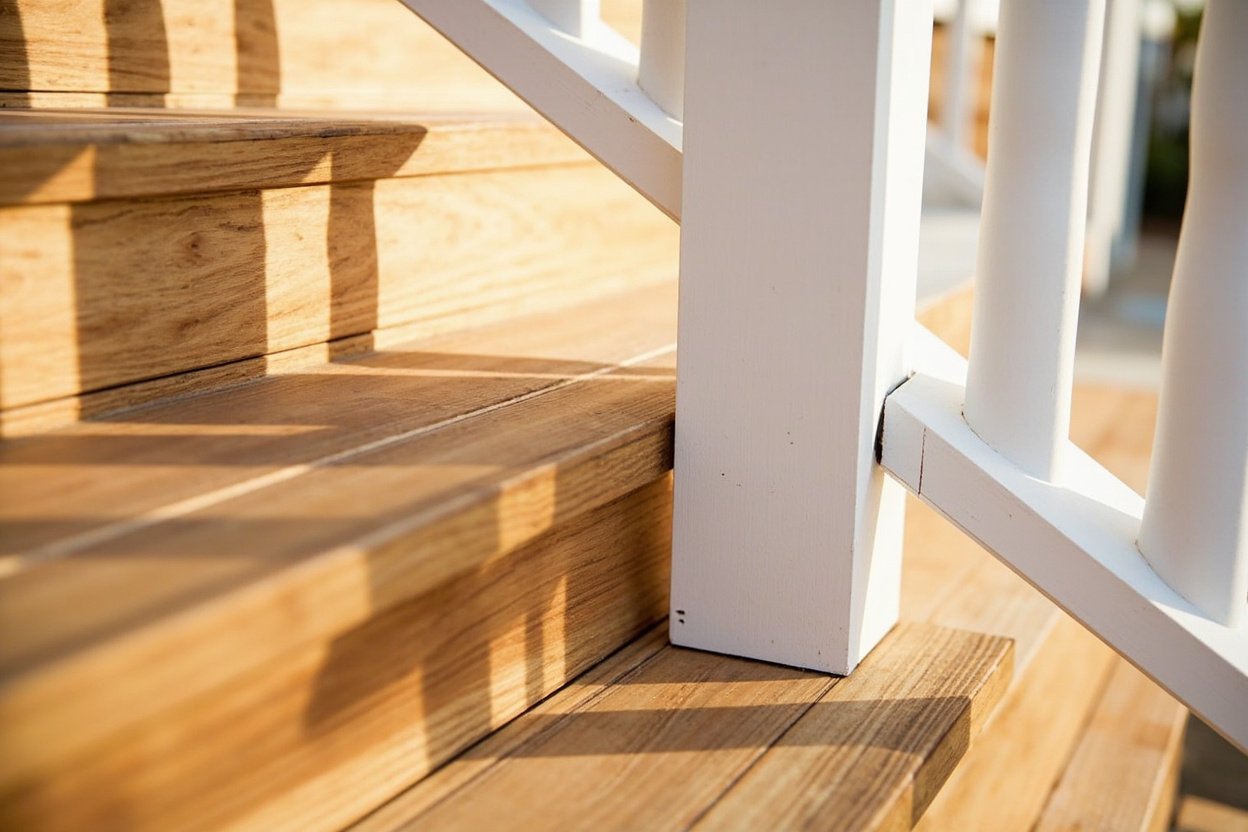
Deck stairs require equal attention. Proper stair construction includes appropriately sized treads and risers, secure stringer attachment, and code-compliant handrails. Treads should provide adequate traction given Boston’s snowy and icy conditions during winter months. We recommend considering built-in lighting along stair treads for added safety during evening use.
Weather Exposure and Maintenance Planning
Protecting your investment starts with understanding how Boston’s weather affects deck performance. Direct sun exposure, rainfall, and seasonal temperature fluctuations all contribute to material wear. Proper maintenance planning begins during the design phase, selecting materials and finishes suited to your specific site conditions.
South-facing decks in Burlington or Bedford may experience more intense sun exposure, while decks in coastal towns like Weymouth or Braintree face additional challenges from salt air. Strategic placement of planters and furniture can help protect high-traffic areas, while choosing materials rated for your specific microclimate extends your deck’s lifespan.
Navigating Permits in Greater Boston Communities
Most deck replacement projects in our service area require building permits, though requirements vary by town. Boston proper has specific guidelines for structures attached to residential properties, while suburban communities like Wellesley, Weston, and Lexington have their own zoning and permit processes. A professional contractor familiar with local regulations can handle the permit application process and ensure your deck meets all applicable codes.
Particular attention must be paid to setbacks, height restrictions, and proximity to property lines. These regulations exist to maintain neighborhood character and ensure firefighter access. Working with an experienced team means your deck replacement proceeds without costly delays or compliance issues.
Planning Your Deck Replacement Project
Replacing a deck typically involves several stages: initial assessment and design, permit application, demolition of the existing structure, construction of the new frame, installation of decking and railings, and final inspection. While timelines vary based on project scope and permit processing in your specific town, most residential deck replacements can be completed within a few weeks once construction begins.
Consider these factors when planning your project:
- Proximity to trees that may cause ongoing debris or shade issues
- Desired features like built-in seating, lighting, or outdoor kitchens
- Future plans that might affect outdoor space usage
- Budget allocation between structural elements and cosmetic features
Investing in quality structural components and professional installation typically costs more upfront but reduces long-term maintenance expenses and extends your deck’s useful life. Your outdoor space should provide years of enjoyment for family gatherings, summer barbecues, and quiet evenings on your porch.
Ready to discuss your project? Visit our deck and porch services page or call (857) 837-2100 to schedule a free onsite estimate.
Advanced Deck & Porch is a brand owned and operated by Sun Shore Construction. All estimates, contracts, and construction services are provided by Sun Shore Construction.
Advanced Deck & Porch | Boston Deck Builder