Thinking about a deck rebuild in Boston? Whether your current deck is showing its age, has structural concerns, or simply no longer meets your needs, a full rebuild is a significant investment that can transform your outdoor living space. At Advanced Deck & Porch, we work with homeowners throughout Greater Boston and MetroWest to plan, design, and build decks that last. Here is a straightforward look at what the process involves.
Why Deck Rebuilds Are Common in the Boston Area
Boston’s climate creates real challenges for outdoor structures. Cold winters, freeze-thaw cycles, humidity, and summer storms all take a toll on decks over time. Many homes in Newton, Brookline, Wellesley, and surrounding towns were built with decks decades ago, and those structures often use older construction standards. Wood that seemed fine a few years ago can develop rot, warping, or loose connections after just a few harsh winters. If your deck is over 15 years old, a professional inspection is worth scheduling before deciding between repairs and a full rebuild.
Structural Framing: The Foundation of a Safe Deck
A deck is only as strong as its frame. During a rebuild, we assess the existing structural framing carefully. In older decks, you often find undersized joists, inadequate beam spacing, or ledger boards that were not properly flashed to the house. These are common issues we see during deck rebuilds in Quincy, Braintree, and Weymouth, where many homes have mature decks from the 1980s and 1990s.
Modern deck building in our service area follows updated codes that require proper load calculations, correct fastener spacing, and secure connections between the deck and the house. We use pressure-treated lumber or engineered beams for framing, and we ensure all footings are set below the frost line to prevent shifting come spring. This structural framing work is not the exciting part of a deck project, but it is the part that keeps your family safe for decades.
Choosing Deck Materials for New England Weather
Once the framing is set, material selection becomes the next major decision. Homeowners in the Boston area have more options today than ever before. Traditional pressure-treated wood remains popular because it handles New England weather well and comes at a lower initial cost. However, Composite decking has become a top choice for homeowners who want minimal maintenance without sacrificing appearance.
Composite decking resists fading, splintering, and moisture absorption, which are particularly valuable traits given our wet springs and snowy winters. A deck built with quality Composite decking in Lexington or Weston will hold its color and structural integrity with far less upkeep than a traditional wood deck. That said, the right choice depends on your budget, aesthetic preferences, and how much maintenance you are willing to do over the years. We walk each homeowner through the pros and cons of each material during the estimate process.
Stairs, Railings, and Safety Standards
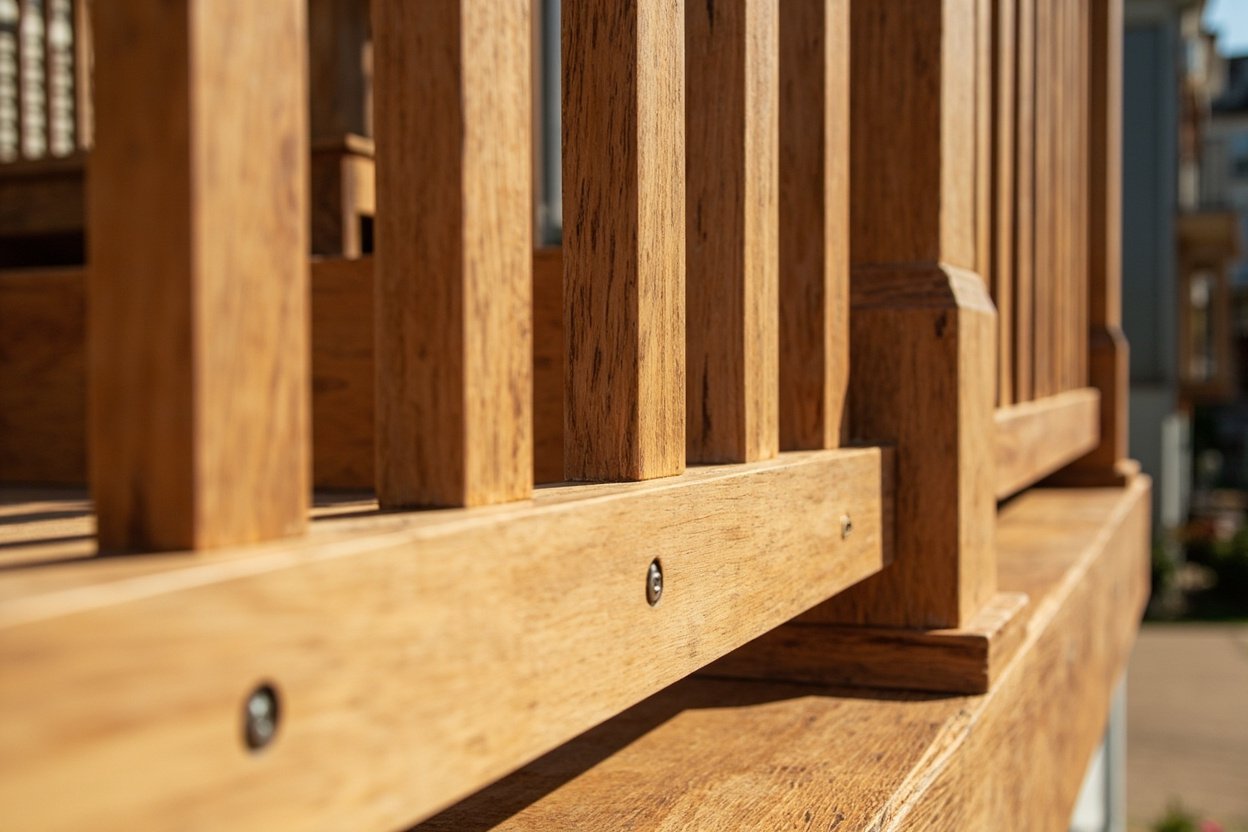
Deck stairs and railings are where safety and style come together. In Massachusetts, deck railings must meet specific height and baluster spacing requirements, and this applies to all municipalities we serve, from Bedford to Canton to Natick. During a rebuild, we assess whether existing stairs meet current code, including rise and run dimensions, handrail requirements, and the strength of the railing system.
Loose railings and wobbly stairs are among the most common complaints we hear from homeowners who have inherited an aging deck. These are not cosmetic issues. They are safety concerns, especially for families with children or older adults. During every rebuild, we rebuild stairs with solid stringers, secure footings, and properly anchored railings. For homeowners who want a polished look, we offer aluminum, vinyl, and composite railing systems that pair well with both wood and Composite decking surfaces.
Planning Around Permits and Weather Exposure
Most municipalities in Greater Boston require a permit for deck construction or significant rebuilds. The requirements vary between towns. For example, permit processes in Wellesley and Wayland may differ slightly from those in Boston proper or Quincy. We handle the permit documentation as part of our service, so you do not need to navigate that process on your own.
Weather exposure also plays a role in project planning. We typically schedule deck rebuilds during the warmer months, from late spring through early fall, when materials cure and seal properly and the work is most comfortable for our crews. If your deck needs to remain functional during construction, we can often phase the work to keep a usable structure in place until the new one is complete. That kind of planning matters, especially for families who use their backyards regularly through the summer.
Maintenance Planning After Your Rebuild
Once your new deck is complete, a simple maintenance plan helps protect your investment for years. Even with Composite decking, periodic cleaning and inspection keep the surface looking its best and allow you to catch any small issues before they become bigger problems. We recommend an annual check of the ledger connections, fasteners, and railing attachments, particularly after a rough winter.
For wood decks, regular sealing and staining extend the lifespan significantly. We can advise on a maintenance schedule based on the materials you chose and the specific conditions in your neighborhood, whether you are in Milton, Norwood, or Acton.
Ready to discuss your project?
Visit our deck and porch services page or call (857) 837-2100 to schedule a free onsite estimate.
Advanced Deck & Porch is a brand owned and operated by Sun Shore Construction. All estimates, contracts, and construction services are provided by Sun Shore Construction.
Advanced Deck & Porch | Boston Deck Builder