A powder room remodel in Boston presents unique opportunities and challenges that set it apart from standard bathroom projects. Whether your Colonial in Cambridge or your Victorian in Jamaica Plain needs a refresh, understanding the specific considerations for Greater Boston’s older housing stock will help you make informed decisions about your renovation.
Why Powder Rooms Deserve Special Attention in Boston Homes
The powder room is often the first room your guests see when visiting your home. In Boston’s historic properties, this small but critical space can make a lasting impression—or reveal the age of your plumbing and finishes. A well-planned powder room remodel not only enhances your home’s value but also addresses the functional limitations that many older homes in Middlesex, Norfolk, and Suffolk Counties face daily.
Boston-area powder rooms typically serve multiple purposes beyond their intended use. They become hand-washing stations after outdoor activities, quick-stop facilities during gatherings, and sometimes even improvised laundry areas in smaller homes. Your remodel should account for these flexible needs while maintaining the elegant first impression that a quality powder room creates.
Layout Constraints: Working Within Boston’s Historic Footprints
One of the most significant challenges in any powder room remodel in Greater Boston is working within existing layout constraints. Many historic homes feature powder rooms built under staircases, in narrow hallways, or within repurposed closets. These unconventional spaces require creative solutions that balance code compliance with homeowner preferences.
When planning your layout, consider these common Boston-specific challenges:
- Ceiling heights that may not meet current codes for mechanical ventilation
- Sub-floor conditions ranging from century-old pine planks to damaged joists
- Wall configurations that contain historic lathe and plaster
- Plumbing stack locations that limit fixture placement options
- Door swing requirements that conflict with existing framing
Professional designers working with Bath Design Boston understand how to maximize every inch of these compact spaces while ensuring all work meets Massachusetts building codes. Our team has experience navigating the specific requirements imposed by historic districts throughout Boston, Cambridge, and surrounding communities.
Waterproofing: The Foundation of a Lasting Boston Powder Room
Waterproofing deserves particular attention in Boston powder room remodels due to the region’s humidity fluctuations and older construction methods. Unlike modern condominiums with engineered moisture barriers, many historic homes lack adequate vapor barriers behind finished walls. This deficiency can lead to mold growth, wood decay, and compromised indoor air quality.
A comprehensive waterproofing approach for your Boston powder room should include proper membrane installation behind all tile and around wet areas, exhaust ventilation sized appropriately for the room’s cubic footage, and careful attention to transitions where different building materials meet. These details may seem minor but they prevent the moisture infiltration that leads to costly callbacks and health concerns.
Boston’s coastal humidity makes adequate ventilation non-negotiable. Building codes require exhaust fans capable of cycling air multiple times per hour, but many older powder rooms rely on passive ventilation or undersized fans. Your remodel should include proper ductwork to the exterior—never vent a bathroom fan into an attic or soffit in our climate.
Design Choices That Honor Boston’s Architectural Heritage
The best powder room remodels in Greater Boston complement their architectural context rather than fight against it. Whether your home is a triple-decker in Somerville, a Federal-style townhouse in Beacon Hill, or a mid-century ranch in Newton, your powder room design should reference the home’s character while providing modern functionality.
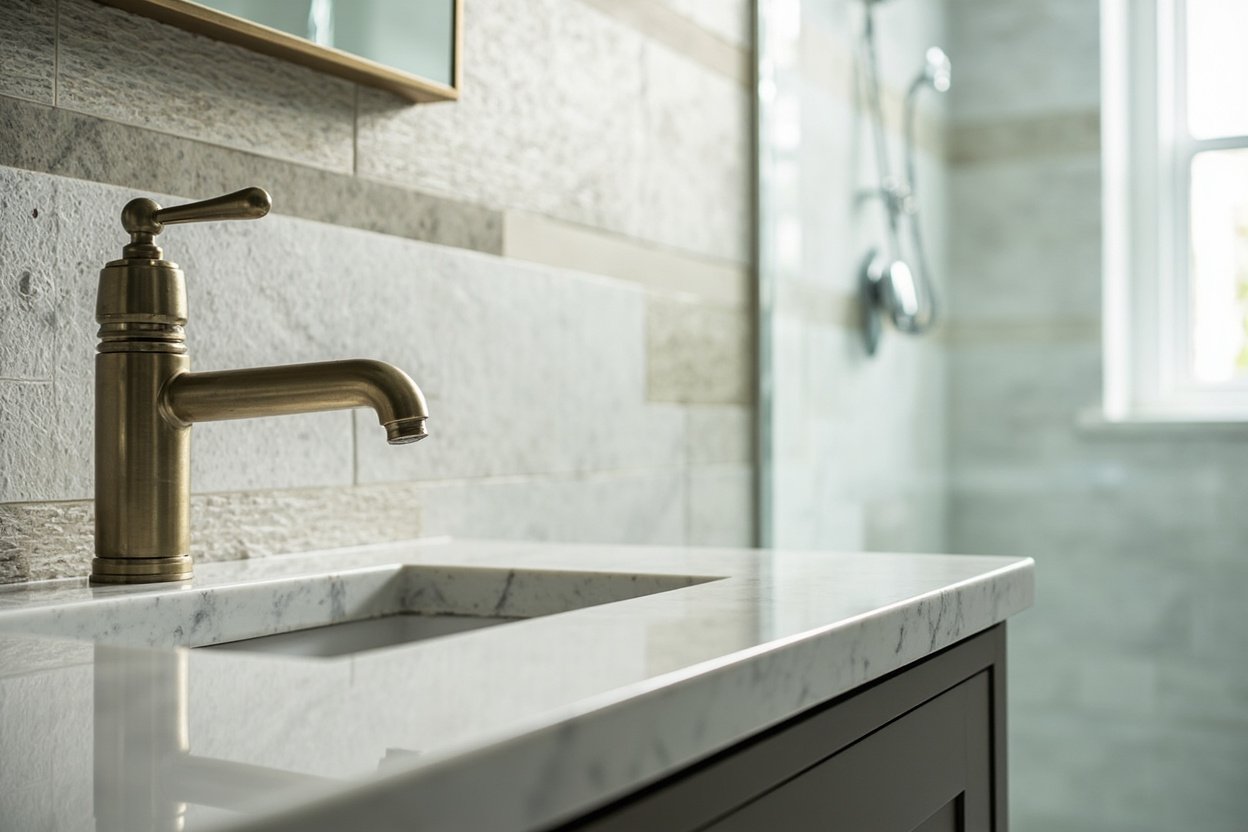
Consider incorporating period-appropriate details such as beadboard wainscoting, chrome or brass fixtures, and classic subway tile in traditional homes. For more contemporary properties, larger-format porcelain tiles, floating vanities, and brushed nickel finishes may better suit the architecture. Custom tile work from Bath Design Boston can establish focal points that elevate the entire space without requiring a large footprint.
Lighting selection significantly impacts powder room ambiance. Boston’s north-facing rooms receive limited natural light, making strategic artificial illumination essential. Layered lighting approaches combining vanity fixtures, recessed general lighting, and accent elements create the flexibility needed for morning routines and evening entertaining.
The Remodeling Process: What Boston Homeowners Need to Know
Understanding the typical sequence of events helps you prepare for your powder room remodel with confidence. The process generally follows these phases:
- Initial consultation to assess existing conditions and discuss goals
- Design development including material selection and fixture specifications
- Permit preparation for historic district review where applicable
- Demolition and structural preparation
- Plumbing and electrical rough-in
- Insulation and waterproofing installation
- Tile and finish work
- Fixture installation and final inspection
Timeline varies based on project scope and material availability, but most powder room remodels in the Boston area complete within a predictable window that your contractor will outline during planning. Specialty fixtures and custom tile often require extended lead times that should factor into your project schedule.
Working with a contractor familiar with Greater Boston’s specific requirements—whether for historic preservation review in Cambridge, soil conditions in Norfolk County, or elevation considerations in coastal Middlesex properties—ensures your project proceeds without unnecessary delays.
Maximizing Value in Your Boston Powder Room Investment
A powder room remodel offers one of the highest returns on investment among Boston-area home improvements. This small space commands outsized importance in buyer perception and daily household function. Thoughtful selections in vanity size, mirror scale, and material quality create impact disproportionate to the square footage involved.
Prioritize durable finishes that withstand heavy use—powder rooms typically see more traffic than master baths in many households. Porcelain tile over natural stone reduces maintenance requirements while providing comparable aesthetic impact. Quality chrome or brushed nickel fixtures resist the hard water spots common throughout Greater Boston’s municipal water systems.
Consider future maintenance when selecting materials. Features like pedestal sinks eliminate the caulk lines that collect mold in busy households. Wall-mounted toilets free floor space for easier cleaning. These practical considerations matter more in high-traffic powder rooms than in primary bathrooms.
Ready to plan? Visit our bathroom remodeling page for Free, no-obligation estimate
When planning your powder room remodel boston, focus on clear scope, proper waterproofing, and smart layout choices.