When you’re thinking about adding a deck or renovating an existing one in the Boston area, there’s a lot to consider beyond just the visual design. New England weather puts unique demands on outdoor structures, and understanding what goes into a well-built deck can help you make smarter decisions for your home. As a custom deck builder serving Boston, Greater Boston, and MetroWest, we’ve seen what works—and what doesn’t—when facing our local climate conditions.
Why Boston-Area Decks Need Special Planning
Boston weather isn’t kind to outdoor structures. We deal with humid summers, freezing winters, and everything in between. This freeze-thaw cycle puts serious stress on materials and connections. Snow load during winter months means your deck framing needs to be structurally sound from day one. A deck built without proper planning for these conditions will show problems faster than you might expect.
Beyond weather, local building codes and permit requirements vary by town. Cities like Newton, Brookline, and Wellesley each have their own zoning rules about deck height, setbacks, and proximity to property lines. Working with a custom deck builder who knows the Greater Boston area means understanding which permits you’ll need and how to navigate the approval process smoothly.
Choosing the Right Deck Materials for Boston Weather
Material selection matters enormously in our climate. Traditional wood decks—whether cedar or pressure-treated—have served New England homeowners for decades. They’re affordable upfront and can look beautiful when maintained properly. However, they require consistent sealing, staining, and upkeep to combat moisture damage and rot.
Composite decking has become increasingly popular among Boston homeowners for good reason. Made from a blend of wood fibers and recycled plastics, composite materials resist moisture, insects, and UV damage without the annual maintenance demands of wood. Many brands now offer realistic wood-grain textures that look natural while standing up to our harsh winters and humid summers.
Other material options worth considering include PVC decking (purely synthetic, extremely durable) and aluminum railings that won’t rust or corrode near coastal areas. Your deck builder should walk you through the pros and cons of each material based on your budget, aesthetic preferences, and willingness to perform ongoing maintenance.
The Importance of Structural Framing and Construction Quality
No matter what surface material you choose, structural framing is the backbone of any safe, long-lasting deck. Proper framing starts with appropriate footings—concrete posts set below the frost line to prevent shifting during winter freeze-thaw cycles. In the Boston area, frost depth can reach 40 inches or more depending on your specific location.
Framing materials typically include pressure-treated lumber for ground contact, with proper hardware rated for outdoor use. Joist spacing must follow building codes to support your chosen decking material. If you’re building multi-level decks or ones with unusual configurations, engineering considerations become even more critical.
Deck stairs deserve special attention. They’re often the first place problems appear as they take the most wear. Proper stair construction includes code-compliant rise and run measurements, secure attachment to the deck framing, and appropriate landing areas at the bottom. Handrails for stairs aren’t just aesthetic—they’re a critical safety requirement that protects your family and guests.
Railing Safety and Code Compliance
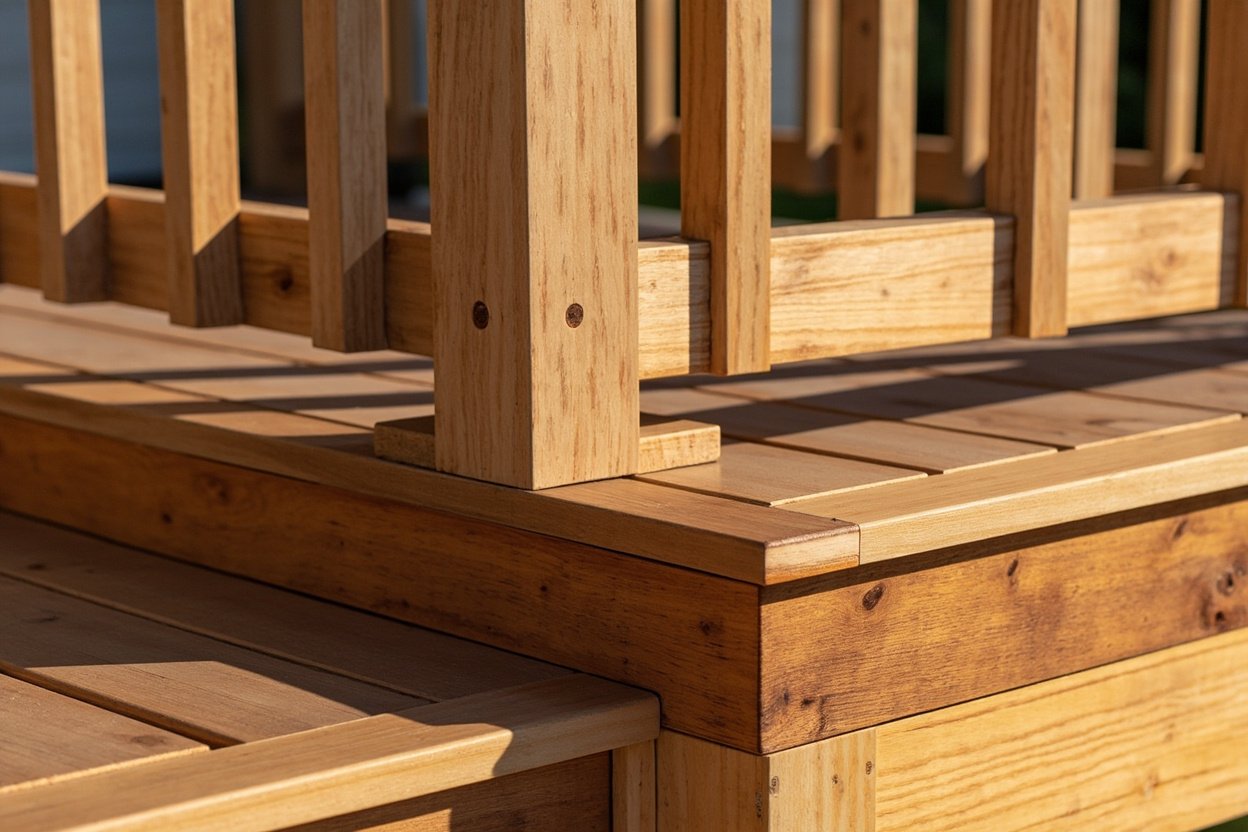
Speaking of railings, these aren’t areas to cut corners. Boston-area building codes specify railing heights (typically 36 inches for decks under 30 inches, 42 inches for higher elevations), baluster spacing (no gaps exceeding 4 inches to prevent child entrapment), and structural requirements for withstanding horizontal pressure.
Railing safety combines several factors: the strength of posts and connections, the rigidity of the railing system, and appropriate material selection. Metal railings (aluminum, steel, or glass) each have different maintenance profiles. Cable railing systems offer modern aesthetics but require periodic tensioning. Your deck builder should explain which railing options work best for your specific situation and budget.
Maintenance Planning for Long-Term Enjoyment
Even the best-built deck requires some ongoing attention. Before starting your project, think about what maintenance you’re willing to perform:
- Wood decks typically need annual cleaning, sealing, and staining every 2-3 years
- Composite and PVC decking benefit from periodic washing but rarely need refinishing
- Hardware connections should be checked annually for loosening or corrosion
- Vegetation clearance around deck posts prevents moisture buildup and rot
- Gaps between decking boards should be kept clear of debris to allow drainage
A thoughtful custom deck builder will discuss maintenance planning during your consultation, helping you understand the long-term commitments different materials require.
Working with Your Custom Deck Builder
The best deck projects happen when homeowners and contractors communicate clearly from the start. Before meeting with any deck builder in the Boston area, think about how you’ll use the space. Do you need room for outdoor dining? A place for kids to play? An entertainment area with space for furniture? These considerations influence everything from size to material selection.
Ask potential builders about their experience with local building departments. A contractor who’s built many decks in Newton or Wellesley will know those towns’ specific requirements and can anticipate potential issues before they become expensive problems. Don’t hesitate to ask about insurance, warranties on their work, and how they handle unexpected complications during construction.
Weather exposure planning should also factor into your project timeline. Spring and early summer are popular times for deck construction in Greater Boston, but projects can proceed through fall as well. Winter builds are less common but sometimes necessary—working with experienced contractors who understand cold-weather concrete curing and material handling makes these projects viable.
Ready to discuss your project? Visit our deck and porch services page or call (857) 837-2100 to schedule a free onsite estimate.
Advanced Deck & Porch is a brand owned and operated by Sun Shore Construction. All estimates, contracts, and construction services are provided by Sun Shore Construction.
Advanced Deck & Porch | Boston Deck Builder